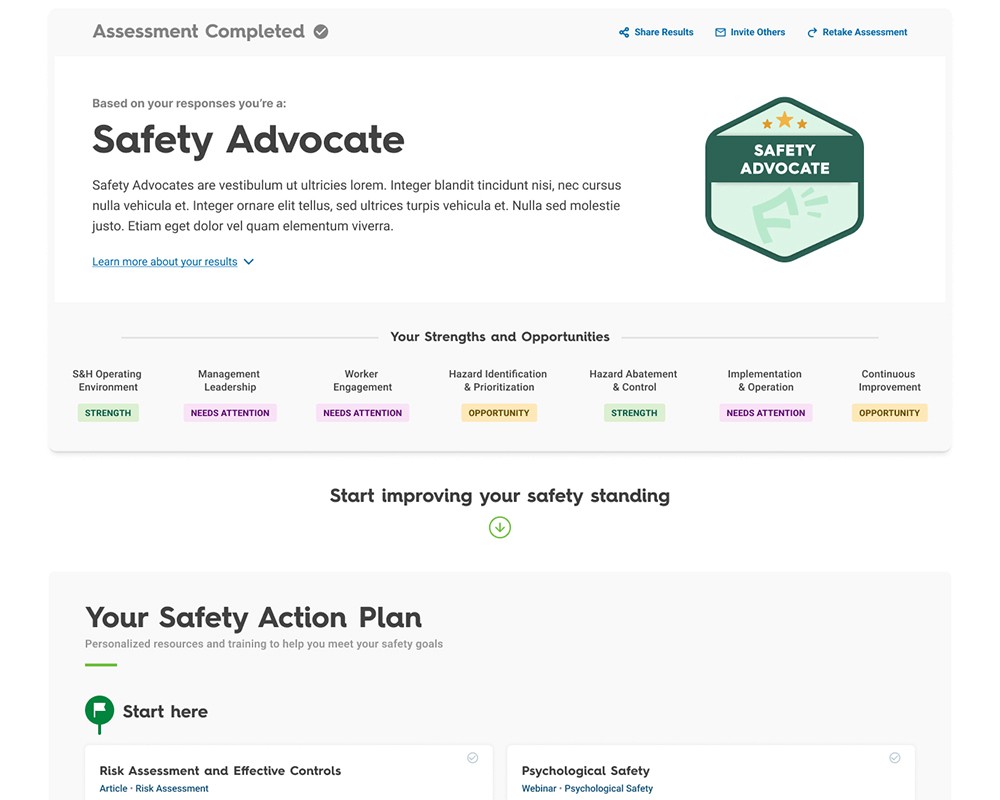
Why this work matters
Check out some project highlights
It was clear early on that NSC didn't have a shortage of quality content or resources but user interviews and stakeholder discovery sessions brought to light some fundamental problems:
Low engagement across all content types
Poor awareness and discoverability of key resources
Declining course enrollment
Lack of personalization and member outreach
While those are some considerable challenges, the status quo presented the team with some great opportunities to not only improve engagement but allow the new tool serve as the catalyst for better understanding the audience and their needs.

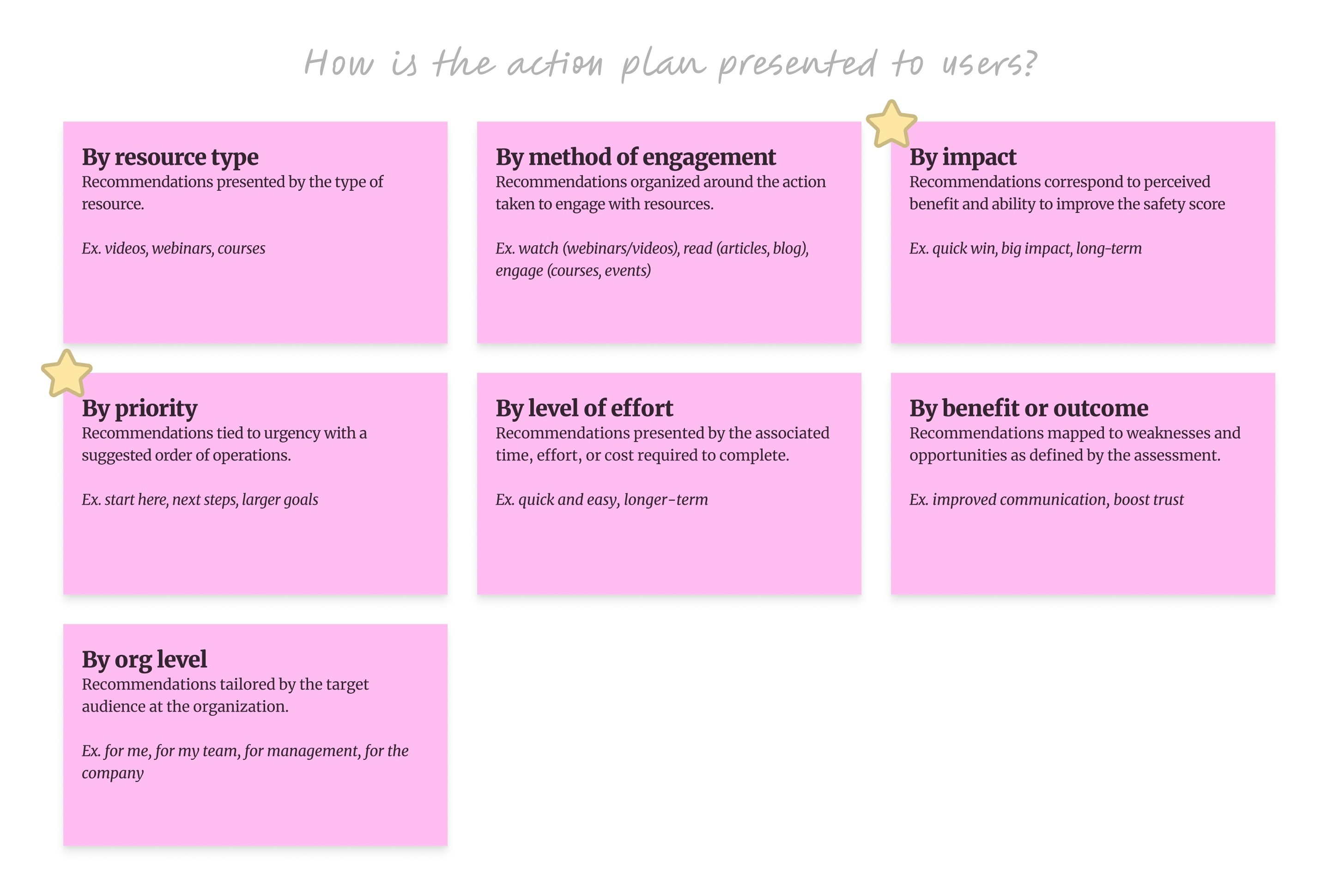
Workshops helped to surface requirements, align stakeholders, and flesh out ideas
My contributions:
Research and exploration, making sense of feedback, engaging the larger group
Facilitated stakeholder workshops
I ran several discovery workshop sessions to better understand the project goals, open the discussion to the wider NSC team, and align the team on requirements and features.
Synthesized user feedback, analytics, and behavioral data
I worked through user feedback, site analytics, and heat map data to identify issues and opportunities for both the core assessment experience as well as supporting elements like navigation and landing pages.
Expanded the conversation
I worked with the marketing, content, and tech teams to understand the implications of the new tool and to align on how we could use the new data collected to unlock future functionality.
Key decisions:
Recommendations, decisions, and ownership moments as lead UX designer
Custom survey solution
A crucial decision was whether to leverage an existing survey tool or if a custom solution was necessary. I stress tested a few of the leading survey tools and reported the pros, cons, and risks of each approach.
My recommendation was a custom tool was necessary to achieve both short-term goals and long-term flexibility.
Updates to site navigation and member profile
I advocated that the project team allocate hours towards building the necessary support elements to accommodate the new assessment tool. Users had to be able to quickly discover and access the new tool.

The assessment responses added a wealth of new data that can be leveraged to create personal experiences
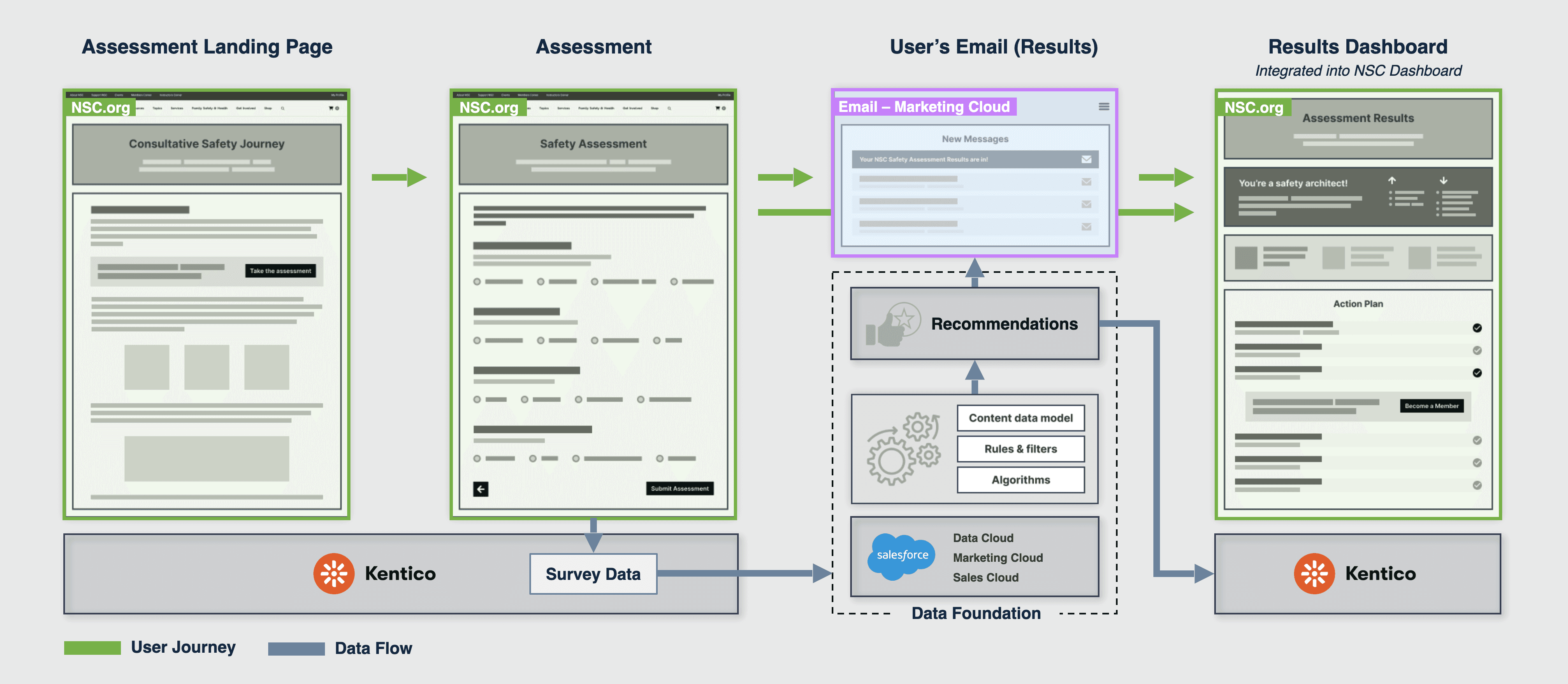
Detailed discussion was required to align data needs with existing systems, sources, and integrations
My contributions:
Research and exploration, aligning on an MVP, building a scaleable foundation
Performed tech audit and tool analysis
I researched existing survey tools versus creating a custom experience and presented findings to the team. After discussion I recommended that the team invest in a custom solution that would offer NSC greater flexibility long-term and reduce re-work in future phases.
Provided guidance on content organization structure
I worked with the NSC content team to redefine how content was tagged and organized to better match the needs of the new assessment experience. New aspects such as industry, experience level, and safety score impact were introduced.
Collaborated with technical team on integrations and personalization opportunities
I worked with the product and technical teams to synthesize user flows, data flows, and integrations to identify gaps and opportunities.
Key decisions:
Recommendations, decisions, and ownership moments as lead UX designer
Custom survey solution
Updates to site navigation and member profile
Recs for future personalization opportunities
I worked with stakeholders to identify, size, and prioritize future personalization efforts separate from the assessment experience.
The NSC stakeholders were thrilled with the final assessment experience and the progress made towards their business goals. The team and I are immensely proud of the work completed:
Designed and built a custom assessment and personalized action-plan experience that offers NSC a true differentiator resource.
Established a new data strategy and began work for future personalization initiatives.
Aligned product, engineering, and marketing teams around a shared vision.
Presented final recommendations to executive leadership and NSC’s board with a commitment for future project funding.

My contributions:
Differentiator tool, long-term thinking, shared vision
Pushed revenue generating services to the forefront
Many resources in the post-assessment action plan are important revenue sources for NSC. By displaying only the courses, events, and products relevant to a specific user gives greater context and meaning.
Helped bolster NSC as the go-to safety experts
While a less trackable metric, an important goal for NSC is to be the go-to workplace safety experts. The new assessment tool was a chance to offer a unique, personal resource that improves trust.
Expanded site component and page template libraries
To support the new assessment the existing site received updates to the navigation and homepages as well as a new landing page able to be leveraged by future marketing campaigns.
Built alignment around a shared vision
While the launch of the assessment and results page was a great initial offering, there were lots of idea unearthed during discovery and design review. By creating and maintaining a vision wireframe the team could keep the future state in mind.
Advanced client relationship
This project built on the strong relationship between my agency and National Safety Council. By thinking big picture, encouraging discussion, and delivering more than just pixels, NSC continued to view us as trusted partners.
Of course no project is ever perfect and it's important to look back and identify what worked and what could be improved next time. A few things come to mind:
Connecting with folks individually outside of larger working sessions was critical to get a more intimate understand of how data is structured, the intricacies of platforms, risks, etc.
Working with a large number of players means there is always a risk of ideas, enhancements, next steps falling through the cracks so thorough documentation was critical.
Direct access to the development team was challenging so I found myself documenting and annotating more than usual to ensure as much context could be provided.
The team was eager and engaged (great!) but that meant being thoughtful and deliberate about what was included in the first phase and which features were included and which were added to the roadmap.
Anytime you're working with stakeholders on future enhancements, wish list items, ideas, etc. it's important to make sure those are clearly documented so they can be acted on in the future. I helped document these findings so a backlog could be formalized.